Reinmatic
AUTONOMOUS ROBOT FOR PROFESSIONAL FLOOR CLEANING

T3 PLUS. THE NEXT GENERATION OF AUTONOMOUS FLOOR CLEANING.

The REINMATIC T3 PLUS scrubs, washes, and dries floors in a single pass. Equipped with autonomous navigation, 360° environmental perception, and an automatic docking station for charging, fresh water refilling, and dirty water drainage. Engineered for professional facilities that require continuous, reliable, and measurable cleaning performance with maximum efficiency and minimal operator supervision.

Key performance
up to 2,000 m²/h
Maximum cleaning productivity
24/7
Autonomous operation, no constant supervision
50 L + 45 L
Clean water + dirty water
up to 6 h
On a single charge
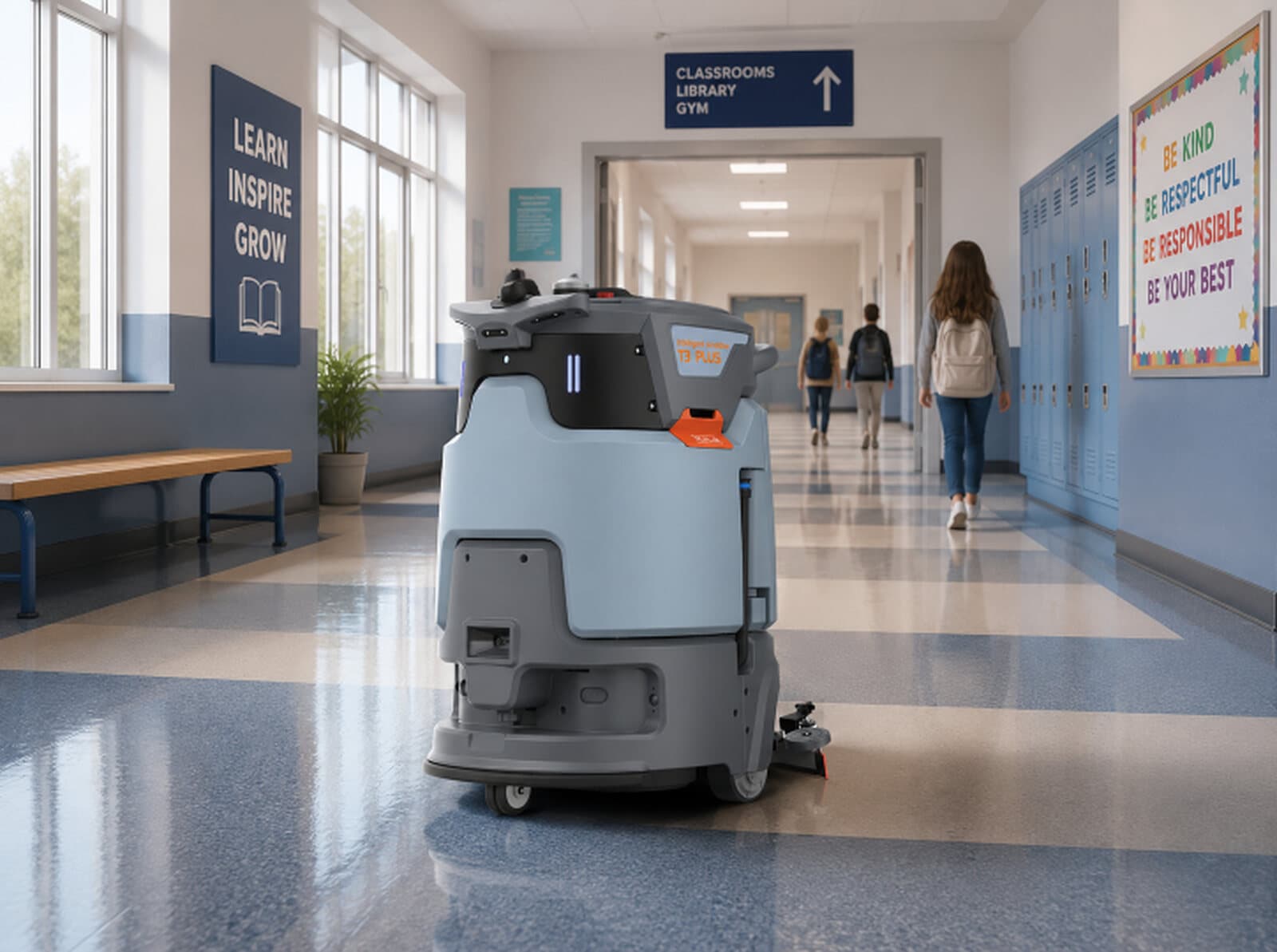
Reinmatic T3 Plus autonomous scrubber-dryer robot cleaning a school corridor past lockers and classroom doors

For spaces where conventional cleaning eats too much of the shift.

T3 Plus is built for mid-size and large floors with heavy traffic and repeating cleaning routes. Instead of an operator spending hours behind a conventional scrubber-dryer, the robot takes over the repetitive part of the job: it plans its own route, works around obstacles, washes and dries the floor, and returns to its docking station when the run is done.

Applications

  • Warehouses and logistics centers
  • Production plants and industrial floors
  • Airports, terminals, and trade fairs
  • Shopping centers and large retail stores
  • Hotels and office buildings
  • Schools, universities, and public institutions
  • Garages and parking areas

Autonomy, capacity, and controlled quality in one system.

T3 Plus combines a scrubber-dryer, autonomous navigation, a full sensor suite, a docking station, and software oversight. The result is a cleaning process you can organize, track, and repeat at the same quality.

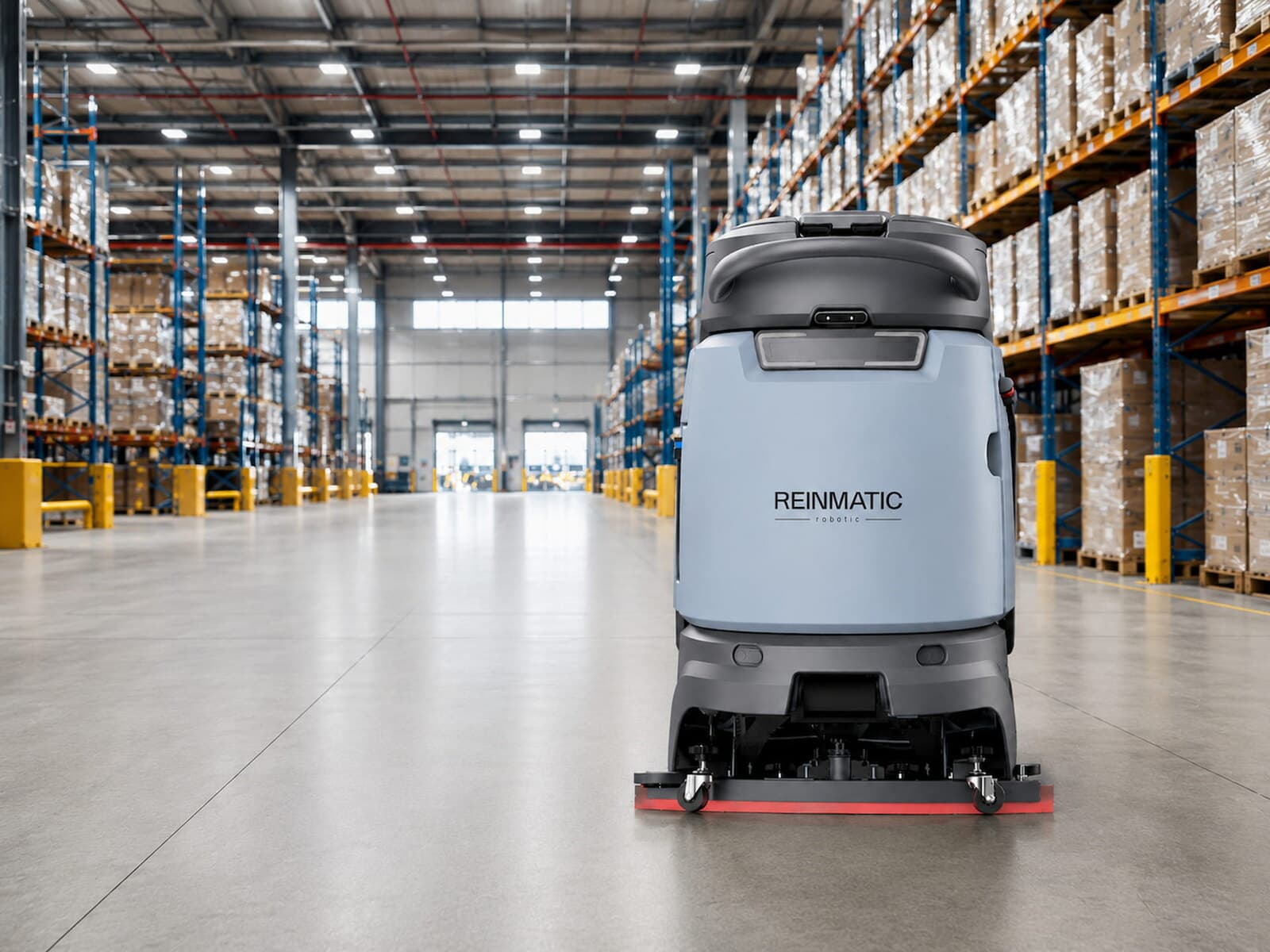
T3 Plus autonomous robot washing and drying a concrete floor in a warehouse main aisle between tall pallet racks

Washing, scrubbing, and drying in a single pass

The robot lays down water, scrubs the surface, and vacuums the dirty water back up, leaving a clean, near-dry floor on hard surfaces such as concrete, epoxy, PVC/vinyl, tile, and terrazzo.

Longer working cycles

A 50 L clean water tank and a 45 L dirty water tank, with five-stage water recycling, cut the number of stops for refilling and draining.
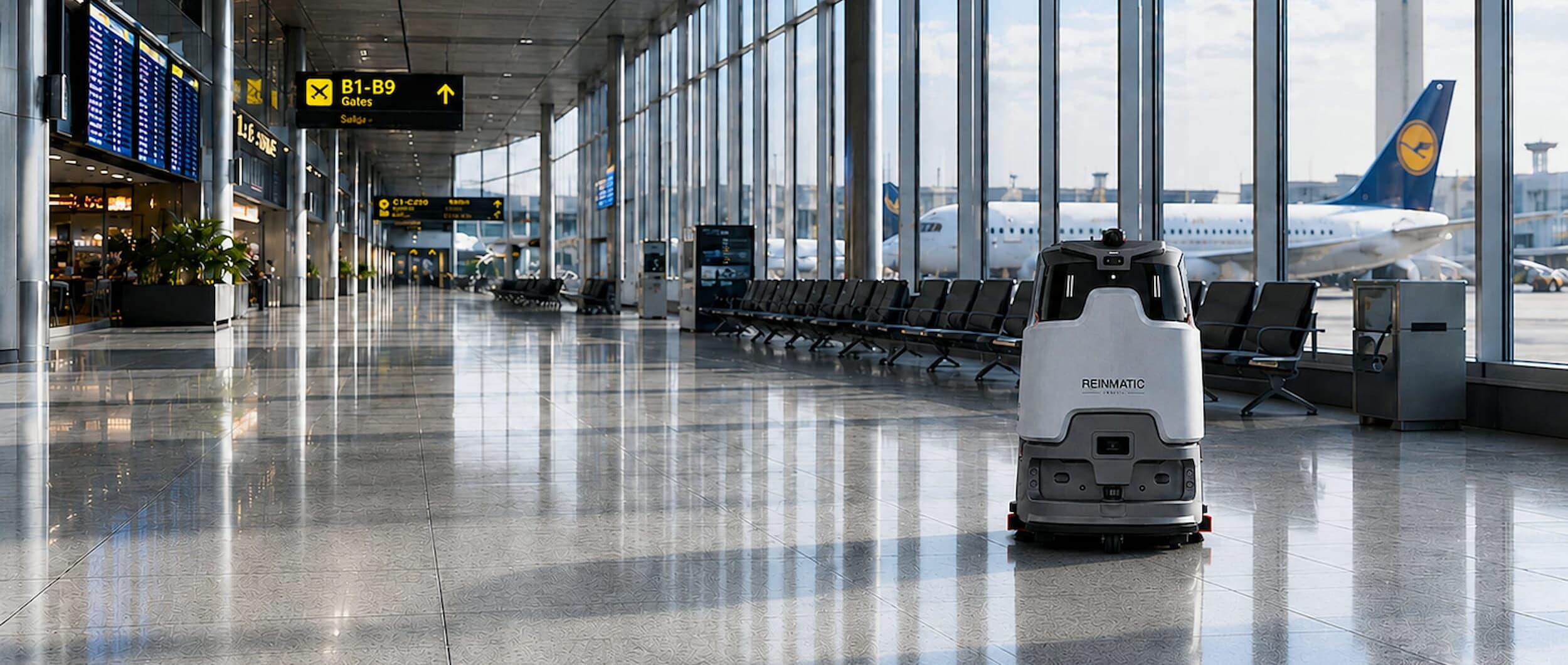
T3 Plus autonomous robot cleaning the polished floor of an airport terminal beside a row of departure-lounge seats

Safe navigation in a live space

3D LiDAR, 2D LiDAR, RGBD and depth cameras, ultrasonic sensors, a safety bumper, and anti-drop protection let it work in busy facilities.
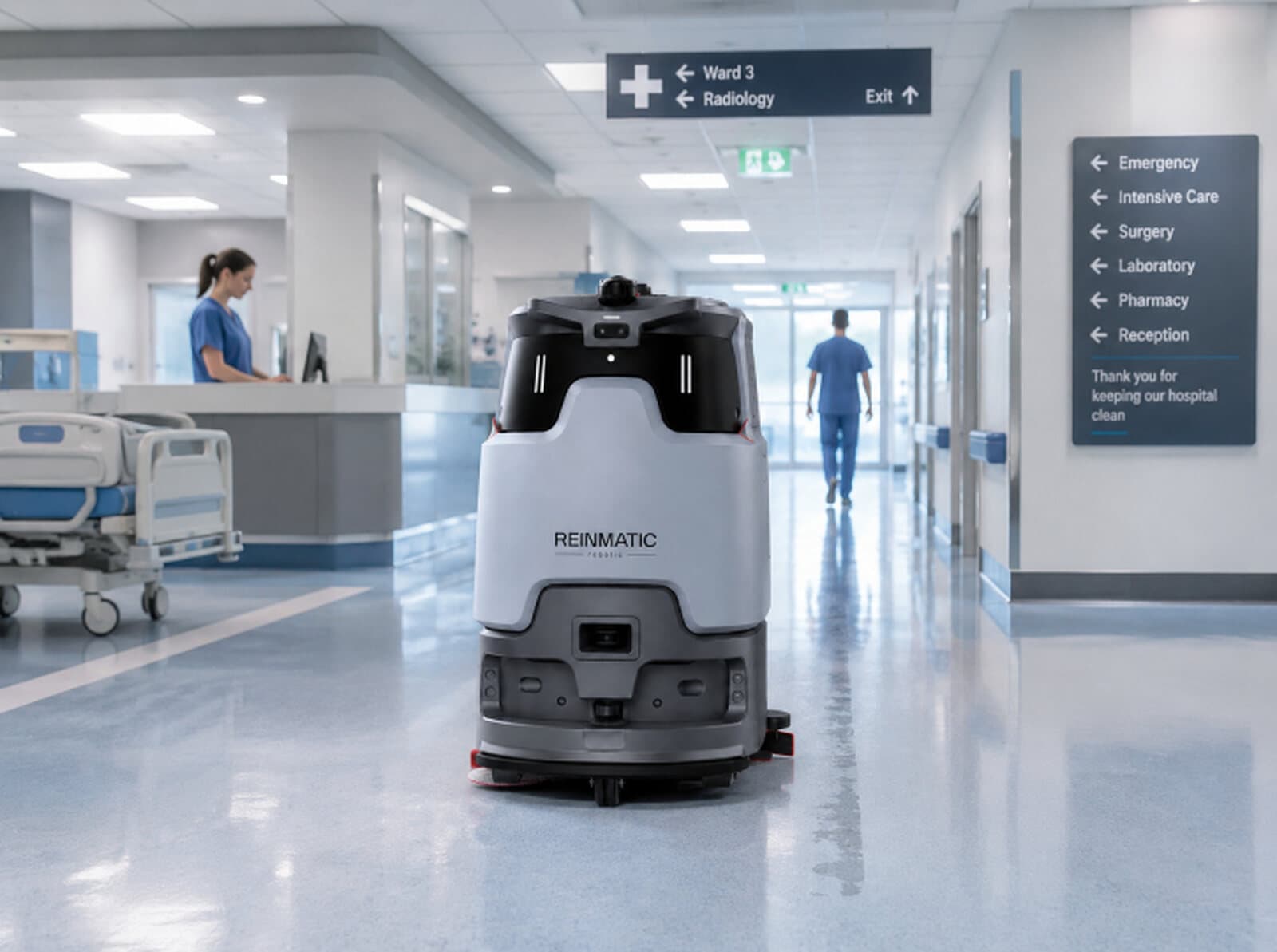
T3 Plus autonomous robot working in a hospital corridor, moving safely past staff and a medical trolley

Quick battery swap

The LiFePO₄ battery delivers up to 6 hours of work, and swapping a pack takes about 30 seconds — which matters in facilities running multiple shifts.
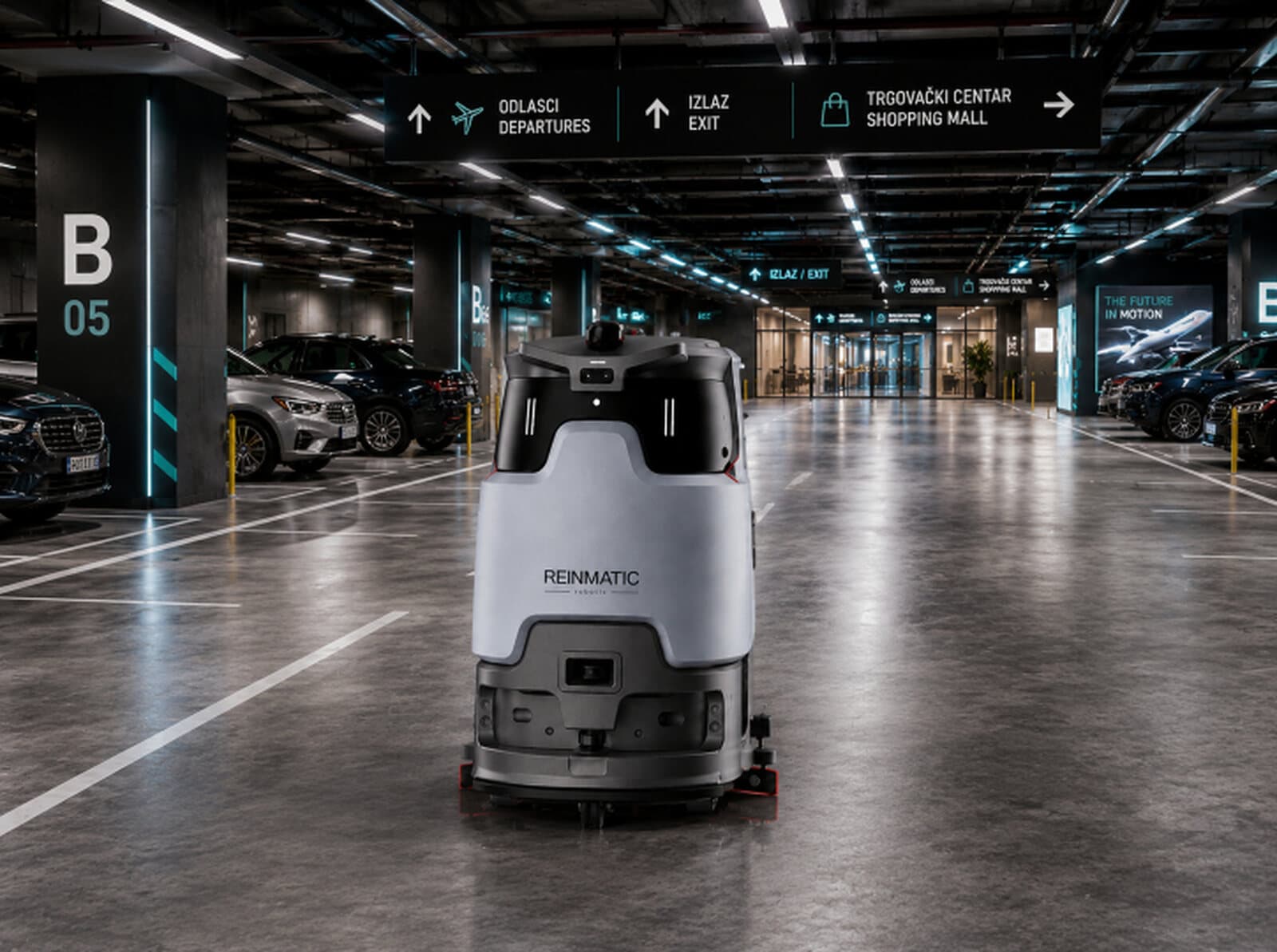
T3 Plus autonomous robot cleaning an underground parking garage between parked cars under artificial light

Autonomous docking station

When a task is finished the robot returns to the station to charge, refill clean water, and drain dirty water — with fewer manual interventions.
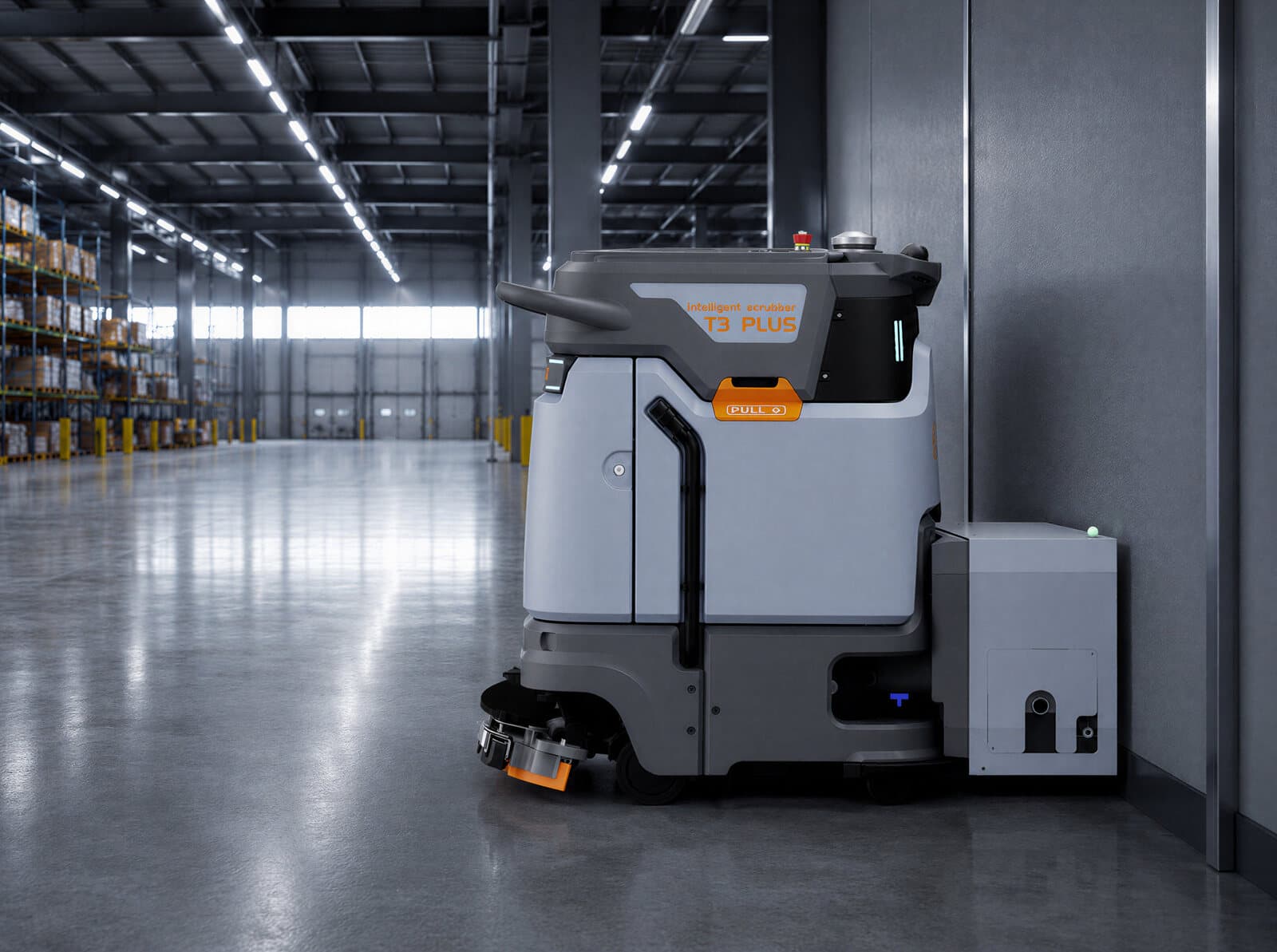
T3 Plus autonomous robot connected to its autonomous docking station in a warehouse while charging and refilling water

Management and oversight

A mobile app and a cloud platform handle status monitoring, task scheduling, OTA updates, and productivity reports.
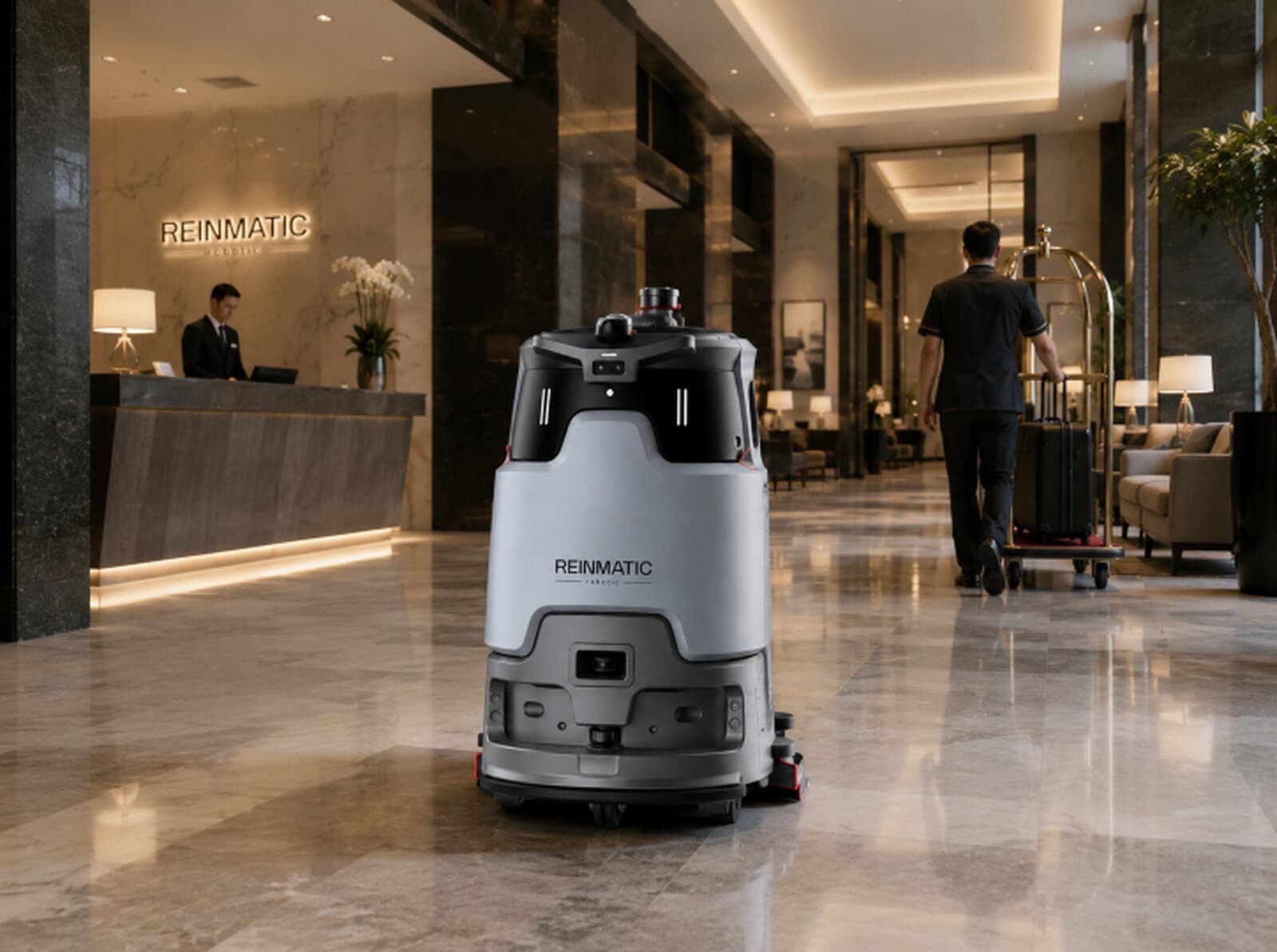
T3 Plus autonomous robot cleaning the polished floor of a hotel lobby beside the reception desk and elevators

More than a stand-in for an operator.

Compared with a worker running a conventional scrubber-dryer, T3 Plus earns its place where large floors are cleaned often, along the same routes, across multiple shifts. The robot doesn't only answer the labor question — it introduces a cleaning process you can plan, track, and measure. Less improvisation, more control over the process: T3 Plus takes no breaks and doesn't depend on vacation schedules, sick days, or staff shortages, which in facilities cleaned every day helps lower long-term costs and shorten the payback period.

The robot versus a conventional machine

  • Greater capacity and availability. It works autonomously with no operator present, so it can clean at night, on weekends, and in the hours when nobody is in the building.
  • Consistent quality. It follows the assigned route every time, holds steady brush pressure and water dosing, and reduces the chance of missed areas.
  • Digital oversight. Software tracks robot status, cleaning schedules, area covered, and productivity reports.

Business value

  • Productivity. Autonomous work up to 2,000 m²/h, with the option to clean outside the facility's operating hours.
  • Quality. The same route, brush pressure, and water dosing on every cleaning cycle.
  • Cost. Less need for a dedicated operator, and tighter control over water and detergent consumption.
  • Safety. Less physical strain on staff, and an automatic stop the moment an obstacle appears.
  • Image. A visible signal that the facility invests in automation, technology, and modern work organization.
Specs by system

Technical specifications

Cleaning

Maximum productivity (theoretical)
up to 2,000 m²/h
Real-world productivity
600–1,200 m²/h
Working width (scrubbing)
500 mm
Squeegee width
650 mm
Brush pressure
20 / 30 kg (factory-set — specified at order)
Brush speed
up to 180 rpm
Maximum suction power
18 kPa
Water recycling
5-stage
Filter
50 / 80 μm
Edge cleaning
5 cm
Compatible floors
PVC/vinyl, ceramic tile, wood, concrete, epoxy, terrazzo, composite

Tanks

Clean water tank
50 L
Dirty water tank
45 L
Combined capacity
95 L
Detergent
added directly to the clean-water tank
Anti-foam tank
1 L
Water flow
0.5–1 L/min

Battery and drive

Battery
LiFePO₄ 24 V / 108 Ah
Battery weight
24 kg
Battery dimensions
315 × 255 × 160 mm
Runtime
up to 6 h
Runtime at maximum suction
up to 4.5 h
Charging time
4 h
Charging current
up to 16 A
Quick battery swap
Yes (about 30 s)
Drive motors
2 × 300 W
Brush motors
2 × 300 W
Suction motor
500 W

Navigation and safety

Primary navigation
3D LiDAR
Sensors
3D LiDAR, 2D LiDAR, 1 RGBD camera, 4 depth cameras, 2 ultrasonic sensors
Safety features
Bumper, anti-drop, E-stop, anti-collision
Obstacle detection
from 5 cm
Maximum site size (single map)
up to 50,000 m²
Maximum speed
1 m/s
Maximum incline
Min. turning width
150 cm
Min. aisle width
90 cm
Operating modes
Automatic / manual

Dimensions

Robot dimensions (L × W × H)
860 × 600 × 1,100 mm
Weight (empty)
150 kg
Noise level
≤ 70 dB
Protection rating
IPX4
Mobile app / OTA / cloud
Yes

Docking station

Station dimensions
430 × 540 × 460 mm
Station weight
33 kg
Input voltage
100–240 V
Output voltage
24 V
Automatic charging
Yes
Automatic water refill and drain
Yes
Min. installation footprint
150 × 250 cm
Gallery

See the T3 Plus.

A compact autonomous docking station.

When the run is done, the robot returns to a docking station that automatically charges the battery, refills clean water, and drains dirty water — fully ready for the next cycle, with no operator involved. The station measures 430 × 540 × 460 mm, weighs 33 kg, and runs on 100–240 V; installation needs at least 150 × 250 cm of floor space. T3 Plus ships with a LiFePO₄ 24 V / 108 Ah battery and industrial charging up to 16 A, with the option of a second battery for a 30-second swap. Reinmatic supplies brushes, squeegees (650 mm), filters for the water-recycling system (50/80 μm), and other wear parts matched to your floor type and workload.

Request the accessory list →
  • Battery
  • Brushes
  • Squeegee rubber

Get your facility ready for autonomous cleaning.

Send us your floor area, your surface types, the operating schedule, and whether you need integration with elevators, access control, or central management. From there we put together a recommended configuration and a quote for the T3 Plus.